

Lipo 360, also known as circumferential liposuction, is a body contouring procedure designed to reduce stubborn fat around the midsection and create a more balanced silhouette. Instead of treating just the stomach or one isolated area, Lipo 360 addresses the abdomen, waist, flanks, and back together so the torso looks more evenly shaped from every angle.
Recovery is one of the biggest concerns patients have when looking into Lipo 360, and in this blog, we’ll walk you through the Lipo 360 recovery timeline, including what to expect after surgery, how long healing usually takes, and how to support a smoother recovery.
What To Expect After Lipo 360
Since Lipo 360 involves treating multiple areas around the midsection, recovering from the procedure can be a little more involved than healing from liposuction in one smaller area. Your abdomen, waist, flanks, and back may all feel sore, swollen, tight, or tender in the first few days.
This is all part of the recovery process. Many patients feel the most sore and swollen at the beginning, then slowly become more comfortable as their body adjusts. As your body heals, those symptoms typically become easier to manage, and you may start seeing small changes in your shape over the next several weeks.
How Long Does It Take to Recover from Lipo 360?
So, how long is Lipo 360 recovery for most patients? Generally, the initial recovery period lasts around 1 to 2 weeks, depending on the extent of the procedure and how your body responds. However, the healing process does not stop there, and it may take several months for swelling to fully improve and results to become more defined.
Lipo 360 Recovery: A Week-by-Week Breakdown
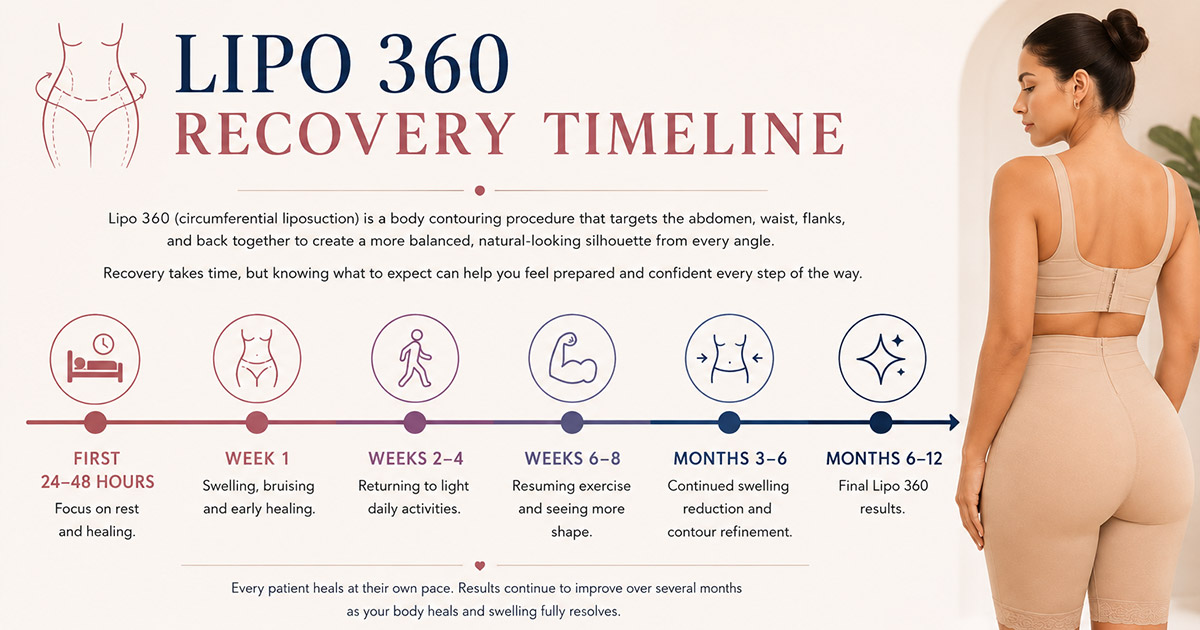
Every patient heals at their own pace, but most Lipo 360 recovery timelines follow a similar pattern. Here is a general week-by-week breakdown of what you may experience as your body heals following a Lipo 360 procedure.
First 24–48 Hours After Lipo 360
The first 24 to 48 hours after Lipo 360 are all about taking it slow. Since the procedure treats the midsection from multiple angles, you may feel sore in more than one area at the same time.
At this point in the Lipo 360 swelling timeline, it is normal for your body to look swollen rather than sculpted. This does not mean something is wrong. Swelling can make your results hard to see at first, and your shape will keep changing as your body heals. The best thing you can do during this stage is to follow your provider’s instructions, wear your compression garment as directed, and take short, gentle walks to help with circulation.
Week 1: Swelling, Bruising, and Early Healing
By the end of the first week, some patients start to feel a little more comfortable, but swelling and bruising are still very normal. Your midsection may feel tight, firm, or sensitive, and certain movements may still feel uncomfortable.
During this stage of the Lipo 360 healing process, your body is working to calm inflammation and begin repairing the treated tissues. You may be able to move around the house more easily, but you should still avoid heavy lifting, intense exercise, and anything that puts too much strain on your core.
Weeks 2–4: Returning to Light Daily Activities
Weeks 2 to 4 often bring a noticeable improvement in comfort and mobility. Many patients feel ready to return to work if their job is not physically demanding, and daily movements like walking, sitting, and getting dressed may feel much easier. You may still notice tightness, swelling, tenderness, or firm areas, but these symptoms are often less uncomfortable than they were in the first week.
This is a good time to ease back into your routine slowly. Your body is still recovering, even if you feel more like yourself. Gentle walking is usually fine, but heavier exercise, lifting, and core-focused movement should wait until your provider gives their approval.
Weeks 6–8: Resuming Exercise and Seeing More Shape
By this stage of your Lipo 360 recovery process, you may feel more confident moving around, working, and easing back into your routine. Your body begins to feel more comfortable and responsive as swelling continues to improve.
If you are cleared to work out, it’s important to gradually rebuild your routine instead of pushing your body too hard too soon. Start with shorter sessions and lower intensity so you can see how your body responds. If you feel more tightness, pressure, or swelling afterward, slow down and give yourself more time before increasing the intensity of your workout routine.
Months 3–6: Continued Swelling Reduction and Contour Refinement
Now this is the phase where the results begin to settle. Swelling and inflammation have significantly improved, and your midsection may start to look more defined and balanced.
As your results become clearer, it is worth protecting that progress with habits you can actually maintain. Staying active, eating in a way that supports your body, and avoiding major weight changes can all help maintain the shape that is starting to come through.
Months 6–12: Final Lipo 360 Results
Between months 6 and 12, your body is usually in the final stretch of recovery. There should typically be little to no visible swelling, and the treated areas should feel much softer and more settled. As a result, your clothes may fit more smoothly, and you may have a clearer idea of your long-term results.
How to Speed Up Lipo 360 Recovery and Support Smoother Healing
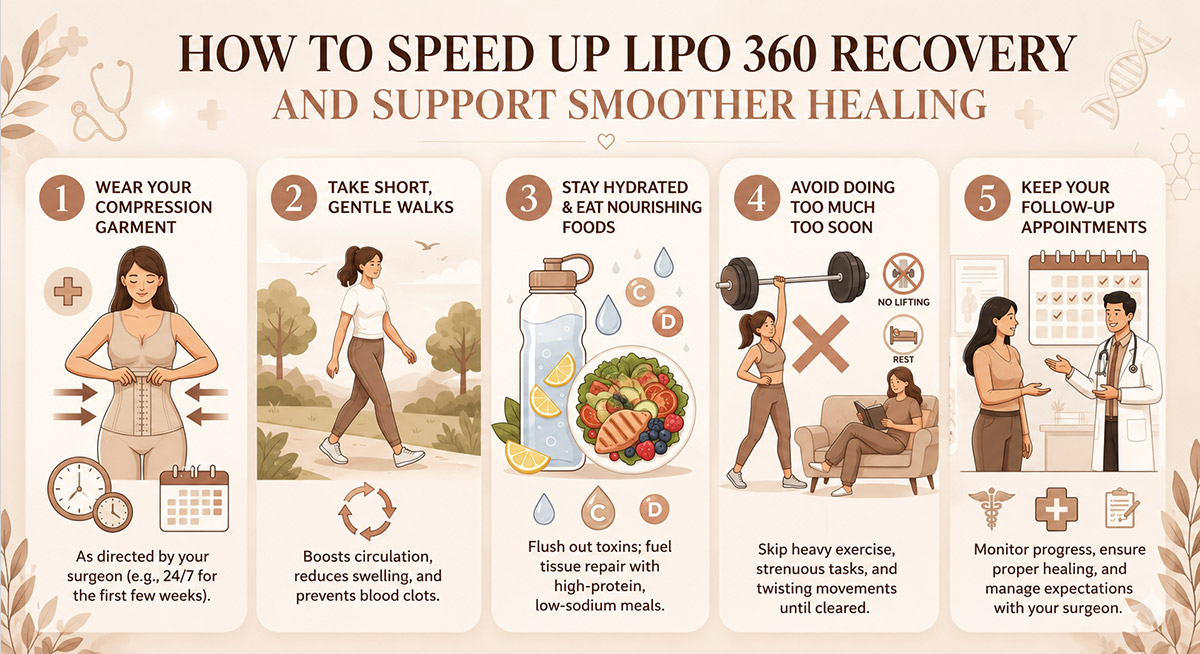
While the recovery timeline varies from patient to patient, proper aftercare can help your body heal as comfortably and efficiently as possible. It’s important to note that “speeding up” recovery doesn’t mean rushing your body or ignoring your provider’s instructions. Here are some helpful tips to support your recovery without putting unnecessary stress on your body:
1. Wear your compression garment as directed
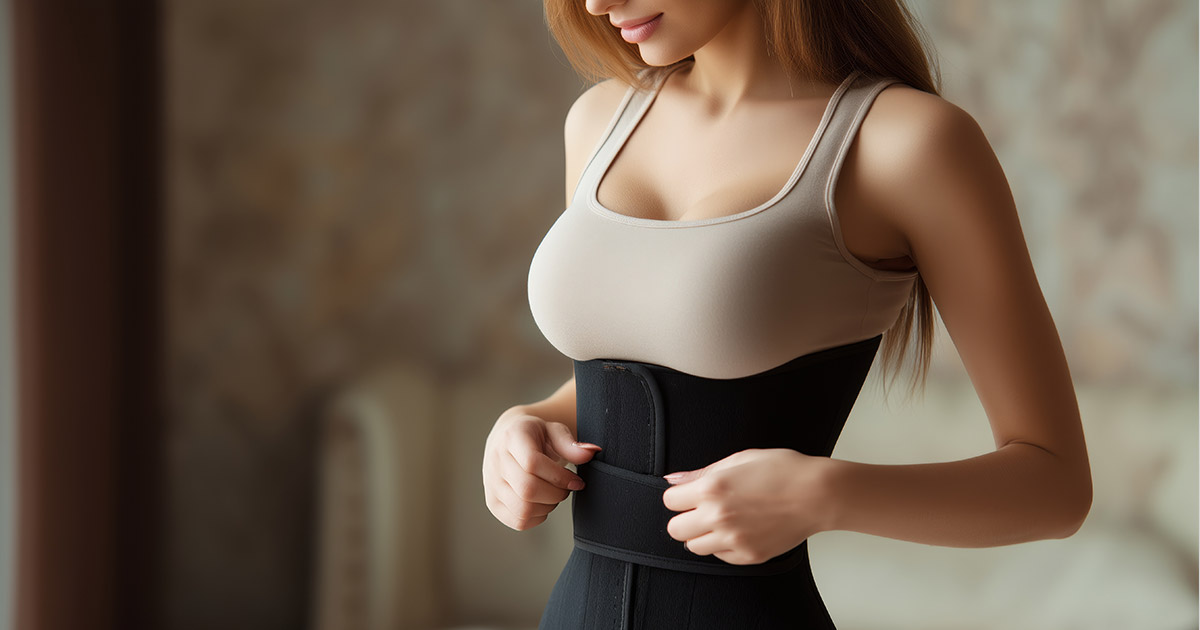
A compression garment is a medical-grade support garment that helps apply steady pressure around the body after a procedure. Providers typically advise patients to wear a compression garment following Lipo 360 because it helps the treated areas feel more secure while the body heals and swelling begins to settle.
Your provider will let you know how many hours a day to wear your compression garment and when you can safely take it off. If it feels too tight, rolls down, pinches, digs into your skin, or causes unusual discomfort, reach out to your provider before making any changes yourself.
2. Take short, gentle walks
Rest is a major part of recovery, but staying completely inactive can make you feel more stiff and uncomfortable. Short, gentle walks can help improve circulation and keep your body from feeling too stiff during early recovery. This should be light movement only, not a long walk, workout, or attempt to “push through” healing.
Start with short walks around your home and slowly increase movement as your provider allows. The goal is to keep your body moving lightly without raising your heart rate too much or putting strain on your midsection.
3. Stay hydrated and eat nourishing foods

Healing takes energy, so this is not the time to skip meals or follow a very restrictive diet. Your body needs water, protein, and nutrient-rich foods to repair tissue and recover well. Lean proteins, colorful fruits and vegetables, whole grains, and healthy fats are all good choices during this stage.
It may also help to limit salty foods, especially during the early weeks, since sodium can make swelling feel worse. You do not need a strict diet, but steady, nourishing meals can make recovery feel smoother.
4. Avoid doing too much too soon

It is common to feel impatient once you start feeling better, but this is where many patients accidentally overdo it. Heavy lifting, intense workouts, bending, twisting, and core exercises can increase discomfort or swelling if your body is not ready yet.
Recovery is not the time to test your limits. Follow your provider’s guidance, and pay attention to any changes after activity. If you feel more sore, swollen, or tight, take that as a cue to rest and adjust your pace.
5. Keep your follow-up appointments

Follow-up visits are an important part of recovery. They allow your provider to check your healing, monitor swelling, review your compression garment fit, and answer questions about your activity level.
Even if you feel like you are healing well, these appointments help make sure your recovery is progressing as expected. They also give you a chance to ask when you can return to work, exercise, travel, or other normal activities.
Start Your Lipo 360 Journey With a Personalized Consultation
Recovery after Lipo 360 is not just about getting through the first few days. It is about giving your body time to settle, knowing what changes are normal, and understanding when to rest, move, return to work, and gradually increase activity. While most patients follow a similar recovery pattern, your timeline may look different depending on the extent of your procedure, your body’s healing response, and the aftercare plan recommended by your provider. Derma Laser Center offers Lipo 360 for patients who want to address stubborn fat around the abdomen, waist, back, flanks, lower back, bra line area, hips, and oblique area. If you’re ready to take the next step toward a more contoured midsection, fill out our online form to schedule a free 30-minute consultation.