
If you’ve spent years cycling through razors, wax appointments, and ingrown hairs, you’ve probably wondered whether laser hair removal is worth the switch. It’s one of the most requested treatments at Derma Laser Center, and for good reason. The laser hair removal process targets hair at the follicle instead of just the surface, which is why results last so much longer than shaving or waxing. Here’s how it actually works, what to expect during laser hair removal, and how to know if it’s a good fit for you.
What Is Laser Hair Removal?
Laser hair removal is a cosmetic treatment that uses focused light energy to target hair follicles and slow future growth. At Derma Laser Center, treatment plans are customized according to your skin tone, hair type, and treatment area, and most patients see long-term hair reduction rather than a single permanent fix, which is why a full course of sessions, followed by occasional maintenance, tends to get the best results.
How Does Laser Hair Removal Work?
At Derma Laser Center, laser hair removal is personally provided by Dr. Ayman El-Attar, who has been part of the practice’s laser hair removal program since 2002 and is triple board-certified by the American Board of Aesthetic Medicine, the American Board of Laser Surgery, and the American Board of Cosmetic Gynecology.
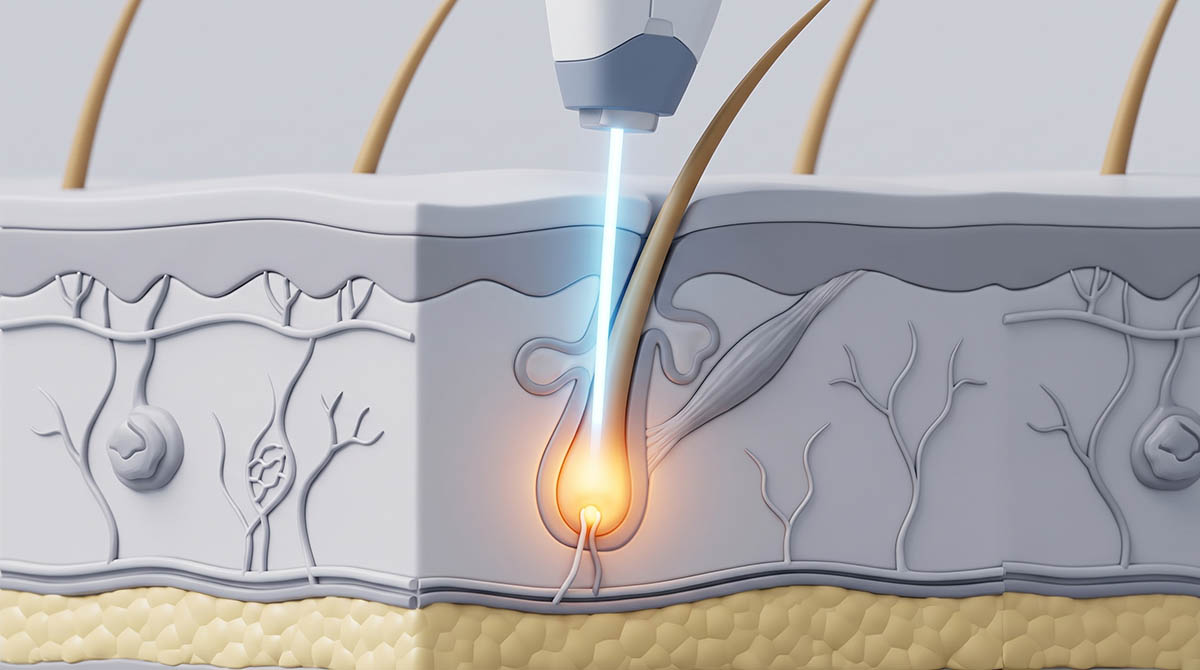
Here’s the laser hair removal process in plain terms: the laser emits a specific wavelength of light that’s absorbed by the pigment (melanin) inside the hair. That light energy converts to heat, which affects the hair follicle enough to slow or reduce future growth from that follicle.
Because this process depends on melanin, results vary somewhat by hair and skin color, which is why Derma Laser Center uses medical-grade laser systems with settings customized to your specific skin tone, hair type, and treatment area rather than one fixed setting for everyone. Built-in cooling is intended to improve comfort as the laser passes over the treatment area.
What to Expect During Laser Hair Removal

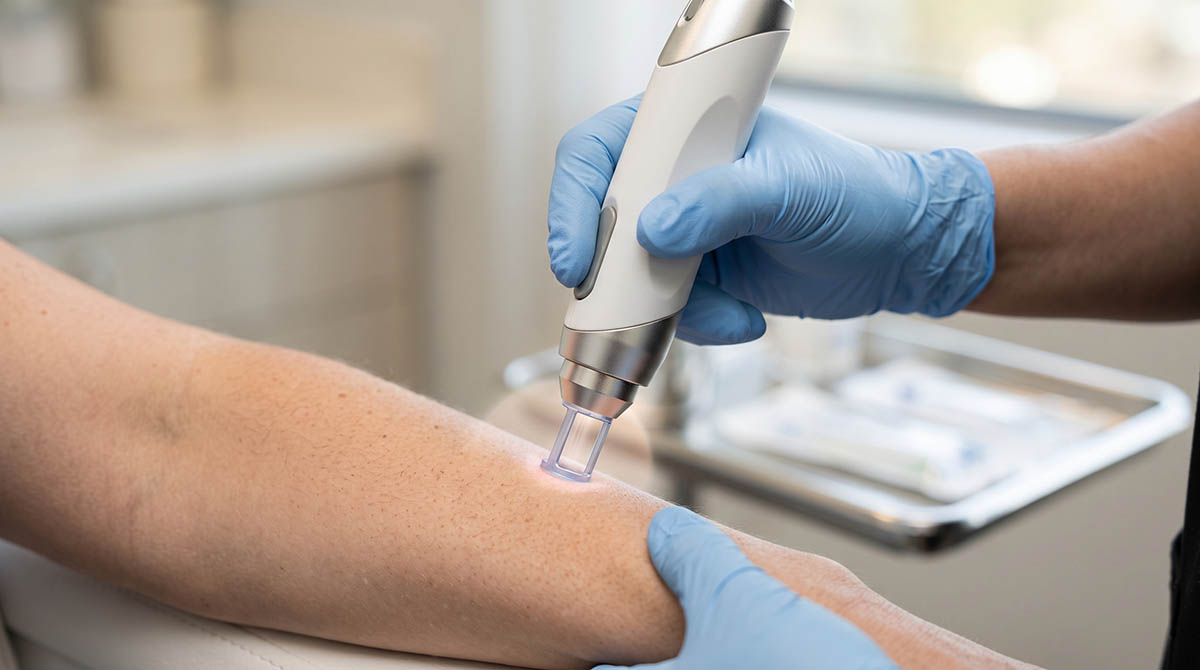
A typical appointment starts with cleansing the treatment area and, if needed, a quick touch-up shave so the laser can pass over the skin cleanly. Protective eyewear is worn throughout. As the laser is applied, most patients feel a warm sensation with each pulse, managed by the device’s built-in cooling.
Session length depends on the treatment area, with smaller areas like the lip or underarms taking less time than larger areas like the legs. Once the session wraps up, your provider will walk you through what’s normal over the next few days and when to schedule your next visit.
Why Multiple Sessions Are Needed
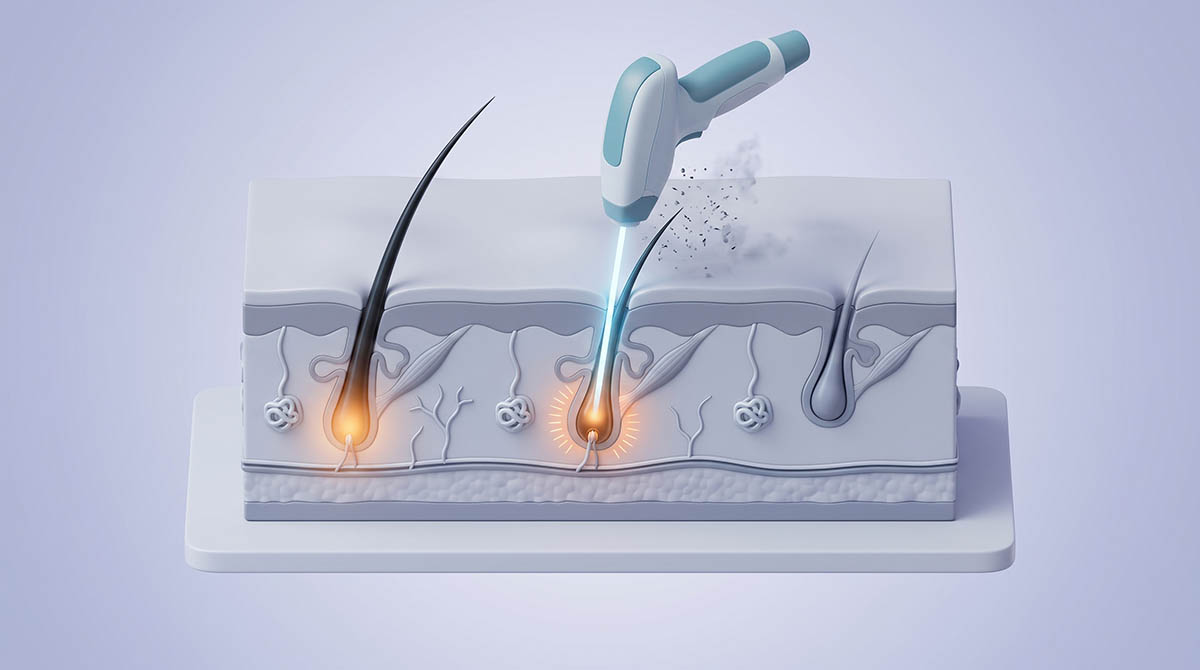
One of the most common questions patients ask is how many laser hair removal sessions are needed. The answer comes down to the laser hair removal hair growth cycle: at any given time, only a portion of your hair is in its active growth phase, while the rest is resting or shedding. Laser treatment works best on hairs that are actively growing, so sessions are spaced several weeks apart to catch new hairs as they cycle into that active phase.
Multiple sessions are generally needed, and the right number for you depends on your hair color, skin tone, and treatment area. There’s no single number that applies to everyone. Your consultation is where Derma Laser Center builds a plan around your specific coloring, goals, and growth cycle, and maintenance sessions may be recommended down the line to manage any regrowth.
Is Laser Hair Removal Right for You?

Laser hair removal tends to work best on darker, coarser hair, since the laser relies on contrast between hair and skin pigment to target the follicle. That doesn’t rule out other hair or skin types; it means your provider needs to evaluate your coloring and adjust settings accordingly, which is exactly why Derma Laser Center treats laser hair removal as customized for every patient.
Your consultation is also where any contraindications get addressed. Certain medications, active skin conditions, recent tanning, and pregnancy are all things your provider will want to discuss before treatment, since they can affect both safety and results.
As with any laser treatment, there are risks worth knowing about, including temporary redness, swelling, or changes in skin color, and, less commonly, the potential for burns or scarring, particularly if settings aren’t customized appropriately for your skin tone. This is exactly why Derma Laser Center starts with an assessment: it’s how risk gets managed, not eliminated outright.
Laser Hair Removal vs. Electrolysis
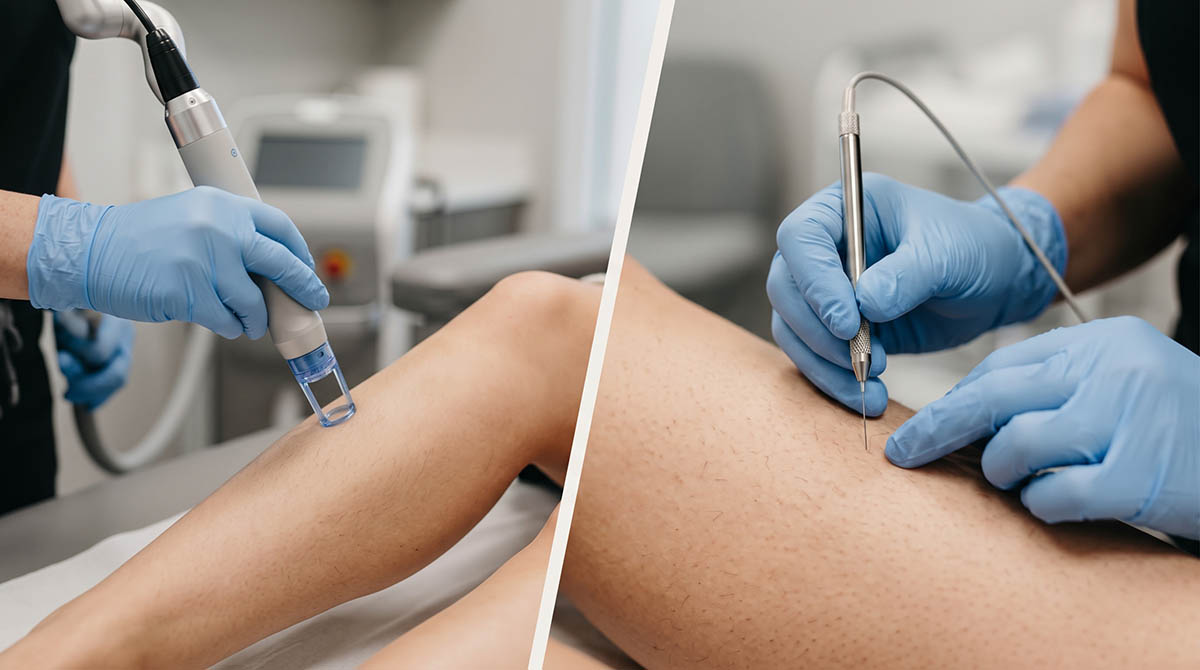
Laser hair removal and electrolysis are both long-term hair reduction methods, but they work differently. Electrolysis uses a fine probe to deliver an electric current into each individual hair follicle, one hair at a time. Because it doesn’t rely on pigment, it can be used on virtually any hair or skin color, but treating a larger area one follicle at a time makes the process longer and more painful.
Laser hair removal treats many follicles at once by targeting melanin, which generally makes it faster for larger areas like the legs or back, but it works best on hair with enough pigment contrast against the skin for the laser to target effectively. Which approach makes more sense for you depends on your hair color, skin tone, and the areas you want treated. Something your consultation can help you sort out.
Laser Hair Removal by Treatment Area
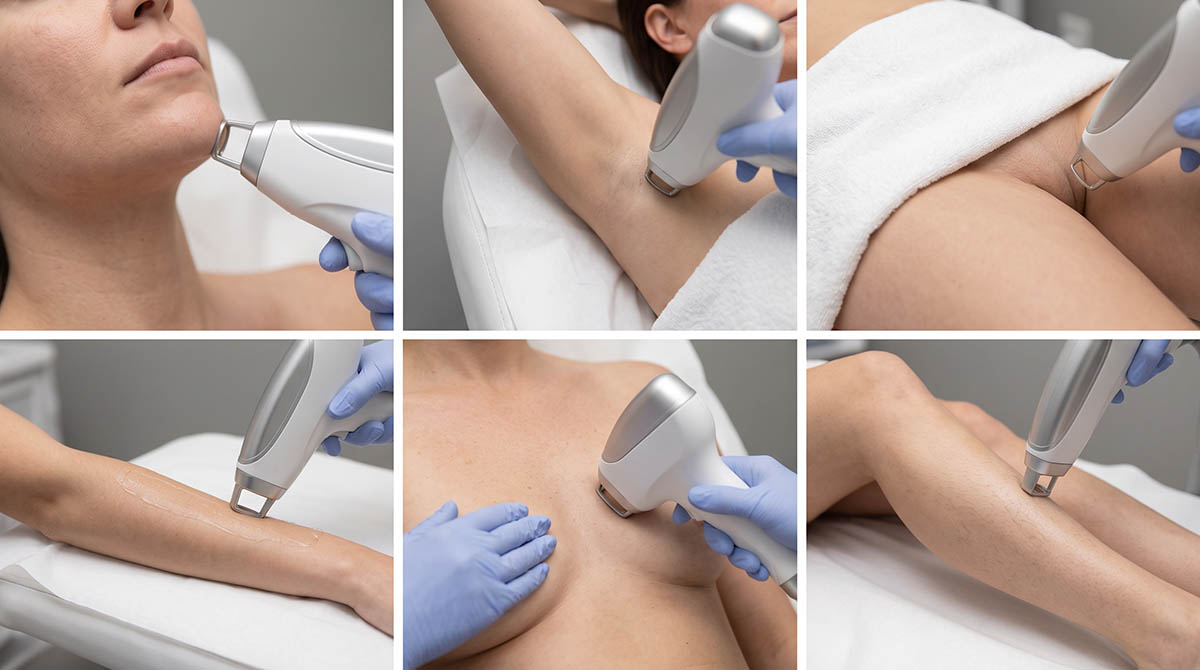
Derma Laser Center treats a wide range of areas: face, underarms, bikini, arms, legs, chest, and custom combinations. Most individual sessions fall within a typical 15–30 minute range, with smaller areas generally on the shorter end and larger areas taking longer:
| Treatment Area | Session Length |
| Face (lip, chin) | Shorter |
| Underarms | Shorter |
| Bikini | Moderate |
| Arms | Moderate |
| Chest | Moderate |
| Full legs | Longer |
Areas with thinner skin, like the bikini line or underarms, tend to feel more noticeable than larger, flatter areas like the legs. Built-in cooling is used throughout to help manage this.
Derma Laser Center doesn’t offer one blanket full-body package, but discounts may be available when you combine multiple areas. Your consultation is where a plan (and price) gets built around exactly what you want treated.
Preparing for Treatment and Aftercare

Before your appointment:
- Avoid booking right before or during your period, when skin is more sensitive. The middle of your cycle tends to be the more comfortable window.
- Ask your practitioner about numbing cream if pain is a concern
- Shave the treatment area about 48 hours beforehand (This will reduce any pain or discomfort)
- Avoid waxing, plucking, or threading in the weeks leading up to treatment (These remove the hair, and its pigment, from the follicle entirely)
- Skip self-tanner and limit sun exposure on the treatment area beforehand
After your appointment:
- Mild redness or sensitivity in the treated area is common and typically settles within a few hours to a day
- Avoid sun exposure and wear SPF on treated skin for several weeks afterward
- Over the following days and weeks, don’t be surprised to see treated hairs gradually shed. That’s the follicle releasing hair it can no longer support, not new growth
- Shaving between sessions is fine and won’t affect your results
Do: shave (not wax) between sessions; wear SPF on treated areas; let your provider know about new medications, skin changes, or recent tanning before your next session.
Don’t: wax, pluck, or thread the treatment area between sessions; expose treated skin to sun or tanning beds shortly before/after a session; assume shedding hair a few weeks post-treatment means it “didn’t work.”
Cost of Laser Hair Removal

Laser hair removal pricing depends on the treatment area, how many areas you’re combining, and how many sessions your plan calls for.
There isn’t a single flat rate that applies to everyone. Derma Laser Center offers free 30-minute consultations at both the Hamilton Township and Somerset locations, where you’ll get a personalized treatment plan and a clear sense of cost before committing to anything.
CareCredit financing is also available for qualified patients, with interest-free plans for up to 18 months, subject to approval and current terms.
Frequently Asked Questions
Is laser hair removal permanent?
No, it’s more accurate to think of it as long-term hair reduction. Most patients see a significant, lasting decrease in hair growth after a full course of treatment, and maintenance sessions may be recommended over time.
How many laser hair removal sessions are needed?
It varies by hair color, skin tone, and treatment area. There’s no single number that applies to everyone. Because laser treatment only works on hairs in their active growth phase, sessions are spaced several weeks apart to catch hair at different points in the growth cycle. Your consultation is where Derma Laser Center builds a specific plan for you.
Can I shave between laser hair removal sessions?
Yes. Shaving doesn’t remove hair from the follicle, so it won’t interfere with your results. In fact, you should shave around 48 hours before every session, since that will reduce pain and discomfort significantly.
Can I wax or pluck between sessions?
It’s best to avoid it. Waxing and plucking pull hair out from the root, removing the pigment the laser needs.
Does laser hair removal hurt?
Most patients describe it as mild discomfort, especially with the built-in cooling used throughout treatment. If pain is a concern, ask your practitioner if they can use numbing cream. Another good tip is not to schedule your appointment right before or during your period. Skin tends to be more sensitive at that point in your cycle, so timing your visit for the middle of your cycle usually makes for a more comfortable session.
Is laser hair removal safe during pregnancy?
If you’re pregnant or think you might be, let your provider know before scheduling, it’s something your consultation will address directly.
Ready to Get Started?
The best way to know what laser hair removal looks like for your skin and hair type is a one-on-one consultation. Derma Laser Center offers free 30-minute consultations at both the Hamilton Township and Somerset locations to build a treatment plan around your goals.